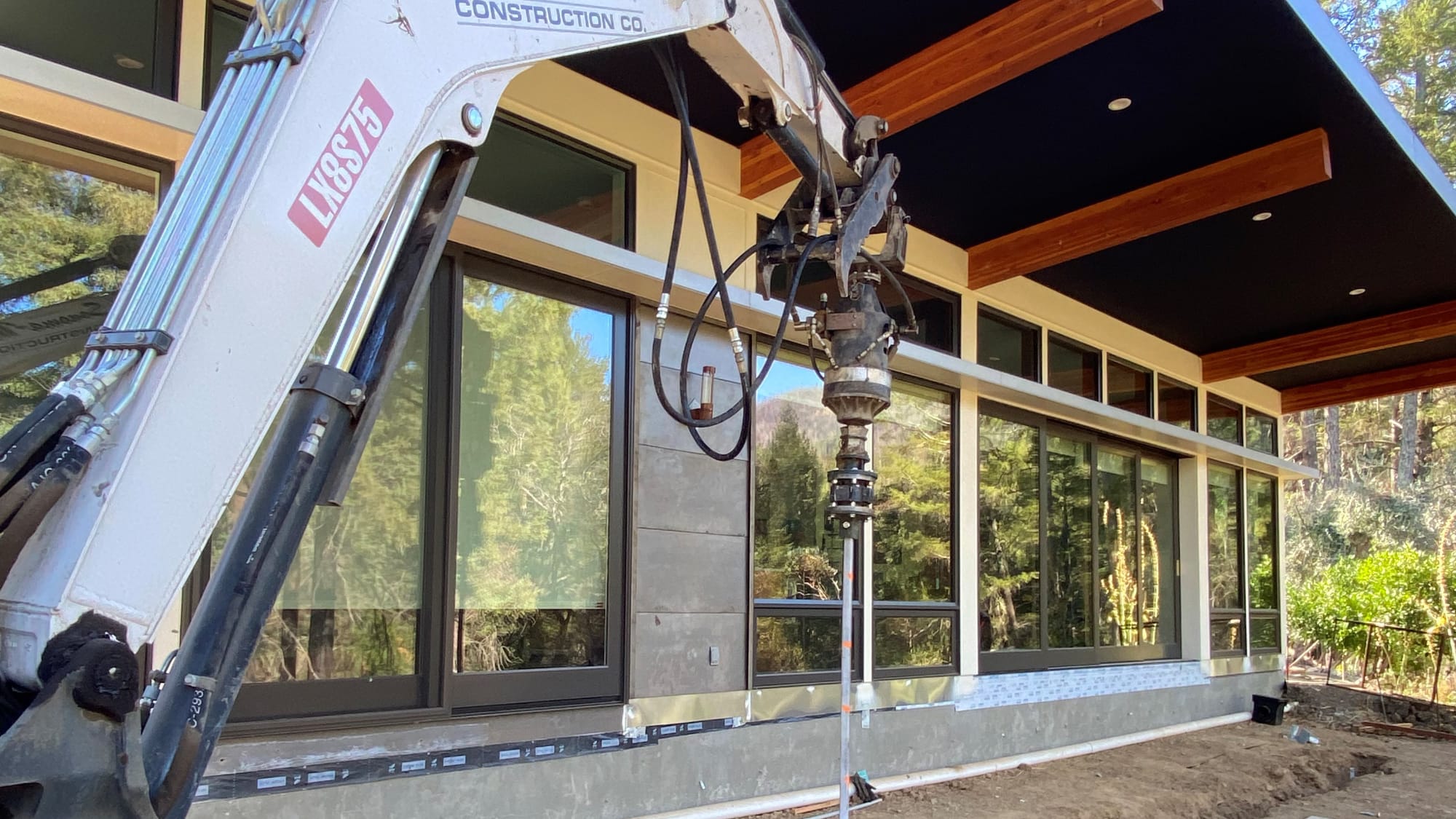
Helical Piers, Resistance Piers, & Tiebacks
Alternative Foundation and Stabilization Solutions
Benefits of Helical Piers, Resistance Piers, and Tiebacks:
- Quick Installation
- Great solution for various soil conditions
- No expensive soils removal
- Popular in environmentally sensitive areas, whether affected by tribal consultation, CEQA issues or high-water tables
- Eliminate the need for:
- Expensive concrete piers
- Expensive rebar cages
- Casing or other normative solutions for poor soil conditions
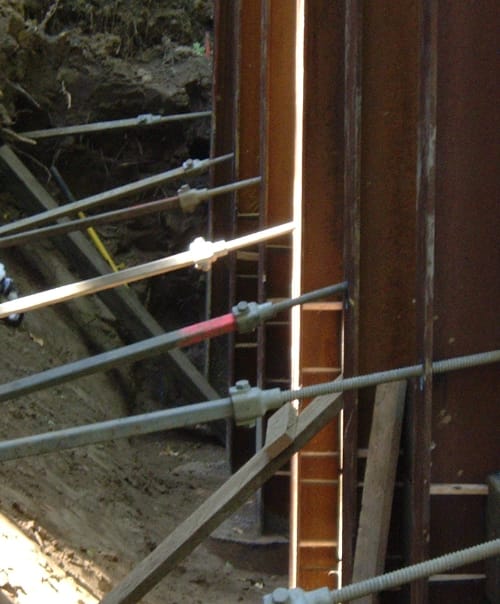
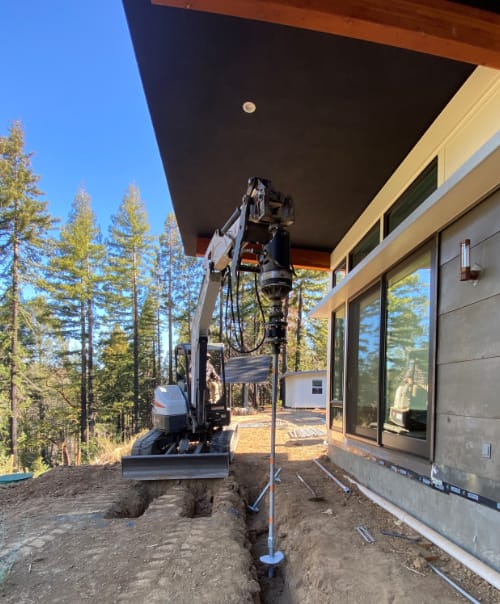
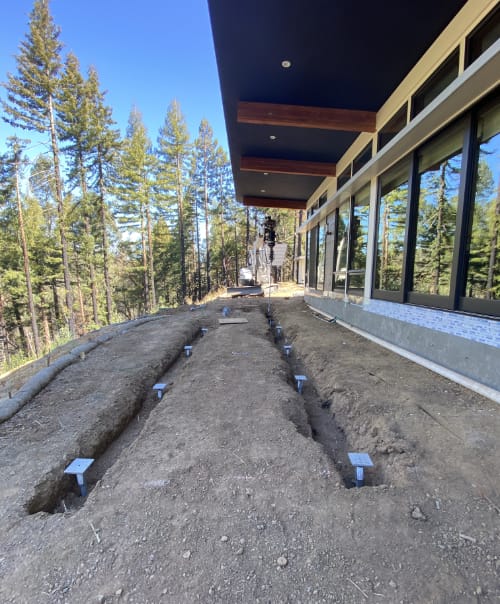
At Point Pacific Drilling, we offer installation of Helical and Resistance Piers as alternative foundation solutions to the typical drilled pier solution.
As with all foundation systems, there are site conditions which make the use of these types of foundation products a cost effective and viable option.
What are Helical Piers?
Helical piers are deep foundation support systems that are used to stabilize structures, especially in areas with unstable soil. They consist of a steel shaft with helical (spiral) blades, resembling a large screw, that are then “screwed” into the ground to transfer the structure’s load to more stable soil or bedrock.
But when can Helical Piers be appropriate?
1. Hillside Home Stabilization - Marin County
- A modern home built on a steep hillside in Mill Valley is experiencing differential settlement due to shifting soils during heavy rain.
- Helical piers are installed to anchor the foundation into deeper, more stable bedrock—offering earthquake resilience and preventing future landslide risk.
2. Solar Farm Installation – Central Valley
- A solar energy developer near Modesto needs to install panel foundations quickly on silty farmland.
- Helical piers are chosen instead of poured concrete due to their speed, minimal site disturbance, and ability to resist uplift during high winds and seismic events.
What are Resistance Piers?
Also known as push piers, resistance piers are foundation repair systems that utilize hydraulic force to drive steel pipe segments into the ground to stabilize or lift settled or sinking foundations. These piers are designed to transfer the weight of a structure from unstable soil to a more stable load-bearing stratum like bedrock or dense soil.
When can Resistance Piers be appropriate?
1. Victorian Home Repair – San Francisco
- A 100-year-old Victorian in the Mission District has visible cracks and uneven floors due to soft, poorly compacted fill soil.
- Resistance piers are hydraulically pushed through the weak upper layers of soil to stabilize and lift the home without demolition, preserving the historical structure.
2. Commercial Warehouse Stabilization – Oakland
- A warehouse in the Port of Oakland shows signs of foundation settlement due to high groundwater levels and seismic liquefaction-prone soils.
- Resistance piers are used to transfer the load deep below the liquefiable zone, securing the structure for both daily operations and seismic events.
What are Helical Tiebacks?
Helical wall tiebacks are designed to straighten or strengthen basement and retaining walls. This method of shoring has become very popular with the engineering community due to their strength and ease of measuring capacity.
Helical tiebacks are used for many applications including:
- Basement Walls
- Retaining Walls
- Shoring
- Temporary Wall Support
- And many more applications
Our Trusted Partner: Foundation Technologies, Inc.
We proudly partner with Foundation Technologies, a leading provider of Chance and Atlas materials. Their vast amount of information, engineering assistance, and support are integral in our ability to deliver high-quality helical and resistance pier and helical tieback solutions to our customers. To learn more about helical and resistance piers and helical tiebacks click on Foundation Technologies logo below.